Roof moss removal Scotland
Roof moss is a menace, it can cause leaks where it grows under tiles, it can cause damage during freeze/thaw cycles due to the water it holds, it is home to insects which attracts birds, it clogs gutters and down pipes, and makes a mess of the ground around your home.
So we’ve established that it’s not good, so what is the best way for roof moss removal Scotland?
- Roof moss removal
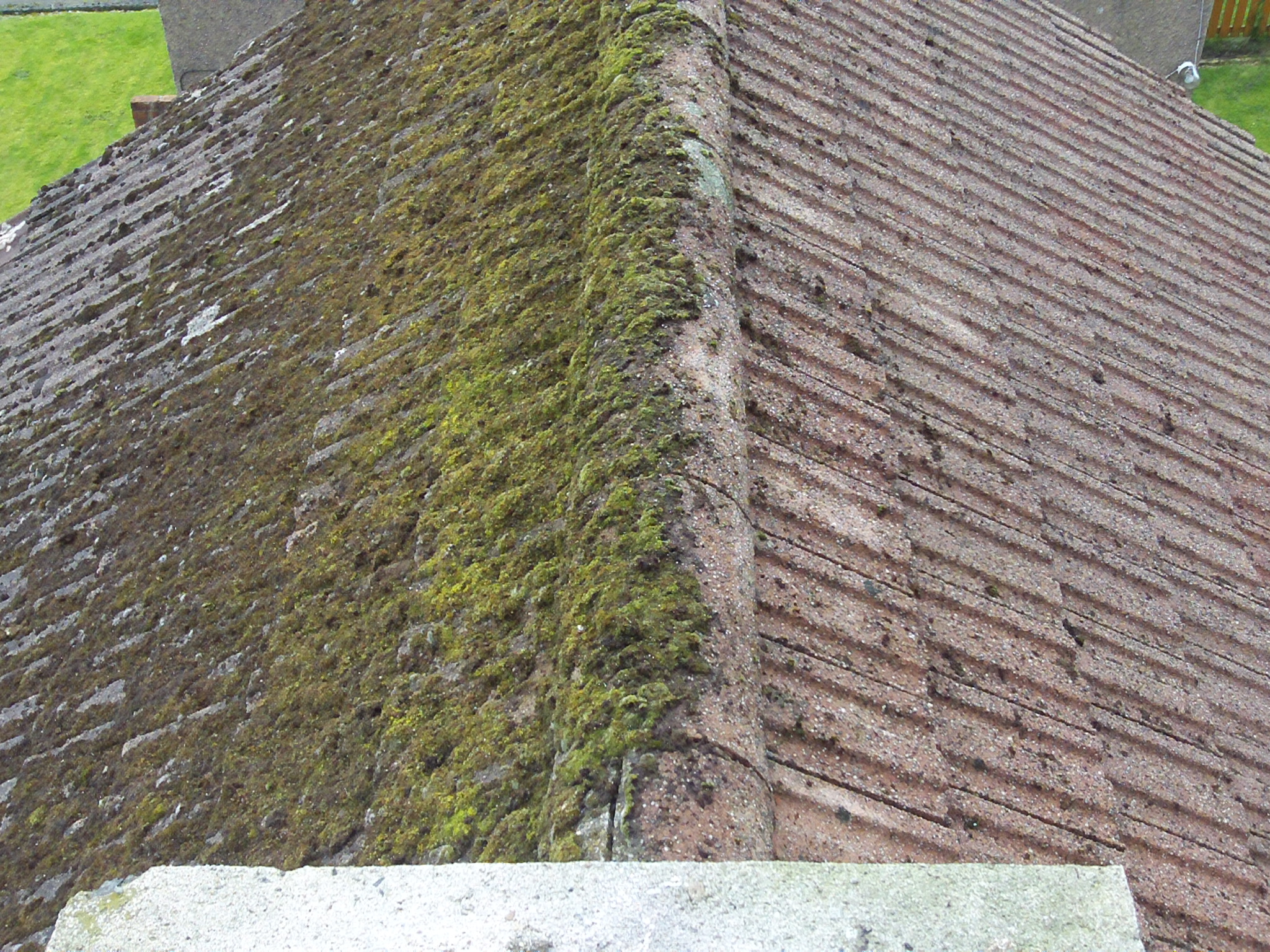
There are quite a few options available for roof moss removal
- High pressure cleaning (HPC)
- Biocide/softwash treatments (Bio)
- Manual scrape & brush removal (Man)
- Copper plating
There are good and bad points for each of these roof moss removal options, and different methods can be used, and are recommended, for some types of roofs and not for others, so it’s not a straight forward do this or do that answer I’m afraid…you didn’t really expect a simple answer did you?
So here is some additional info for each option to help you make your mind up
And if you are still unsure after reading this, remember that quotes and advice are free, and no salesmen will call to try and badger you into something that you didn’t really want)
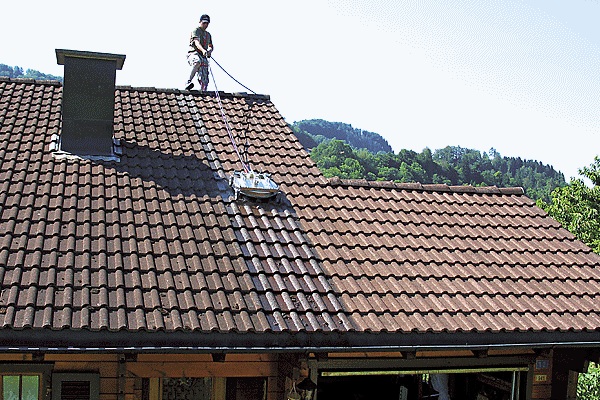
- HPC – Best suited to roofs with good surface condition, but most especially recommended in preparation for a roof coating application (never have you roof coated without a pressure clean first, roof coatings don’t stick well to dirt!), as it provides the most effective and thorough cleaning possible. A word of warning though, make sure the company you choose to do this will use a rotary cleaner and not traditional hand held lances, as blasting away with a high pressure lance and turbo nozzle, while stomping about all over your roof, it is not recommended and can do more damage than good.
- Bio – Biocide treatments comes in various forms now, the traditional one uses a strong chemical agent to kill the moss, usually benzalkonium chloride (nasty stuff) based. There are alternatives available based on mild acids, Hypochlorite and now a very gentle natural and fully biodegradable option. But the recommended option will really depend on the type of tile and the quantity of moss growth. Ideally the roof should be scraped and brushed clear of surface growths before application (all these biocides work on the roots and spores which it can’t always get to when there is heavy growth present) and should ideally be applied in dry weather to give it a chance to work properly
- Man – Manual scraping on its own for roof moss removal is a poor option, as it does not remove the roots and spores which can cause quick regrowth of the problem. However if done alongside a biocide treatment it is as effective as pressure cleaning, the downsides are that takes longer to work (up to several months for full effectiveness) and doesn’t really remove much dirt.
- Copper – Using copper plating, strips or wires is not a recommended option, as it just does not appear to work, I’ve seen too many roofs now supposedly “protected” by the use of copper, and yet still covered in moss!
So to sum up:
Rotary pressure clean = newer roofs or any roof before a coating is applied
Scrape & Biocide = any roof that requires moss removal without a coating
Scrape & brush = not long lasting, and has no cleaning effect
Copper = Not recomended
So there you have it, my basic guide to roof moss removal, but if you would like to know more, to discuss further or have a quote prepared for your own roof, please call and ask.
Roof cleaning FAQ
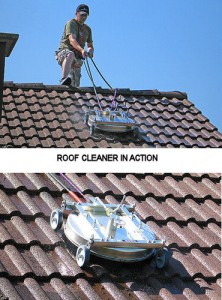
- Roof cleaning by rotary cleaner

So why is a rotary cleaner better than a man with a lance?
Because the operator is able to stay at the roof ridge while the cleaning is done, this reduces the possibility of damage to your tiles, and increases safety for the workers.The cleaning head is simply allowed to roll down the roof, washing the moss off as it goes.
Scrape and bio/softwash?
Where the roof tile is old and where the original coating has worn out, pressure cleaning will return the tile to it’s original concrete colour, and while it will be clean enough, it generally doesn’t look great, so manually scraping the growths and applying an effective biocide treatment can be a good option in these cases, and it is generally a cheaper option as well, although this can depend on the type of roof and tile type.
How much does it all cost?
Moss removal and roof cleaning is more expensive than general pressure washing, no doubt about it, expensive safety equipment and precautions are needed, more pre-wash preparation is required, and more time to clean up afterwards, gutter down pipes may need removed in order to protect your drains from blockages, and then obviously replaced and washed out after the cleaning process is finished, and roof access may require scaffolding or mechanical platforms, all of which can be quite costly.
But it’s not all bad news, as with prices starting at £450 for moss removal and roof cleaning (small terraced or semi-detached property) it may not cost as much as you think (and certainly less than some roof cleaning companies would have you believe!).
Roof Moss removal…is it really necessary?
The most common response we get when we suggest it is best to use a moss removal service to clean a dirty or moss covered roof is…
“Roof moss/algae is only cosmetic and doesn’t do any harm”
Fact or fiction?
A bit of both is the reality here, as while the initial and early growth is really only a cosmetic issue, if left alone and allowed to continue, roof moss has the ability to shave years off the life of your roof, it can grow under, and cause slates to lift, and then allow rain water in, it act’s like a sponge and soaks up water, adding weight and dampness to your roof area (20-30 times it’s weight of water) and provides a home for an amazing amount of insects which then attract birds which leave their own mess behind (!), so moss removal should be regarded as highly beneficial at the least.
And long term the growths can damage the surface, by the effect of both the roots that grow
- underneath the moss
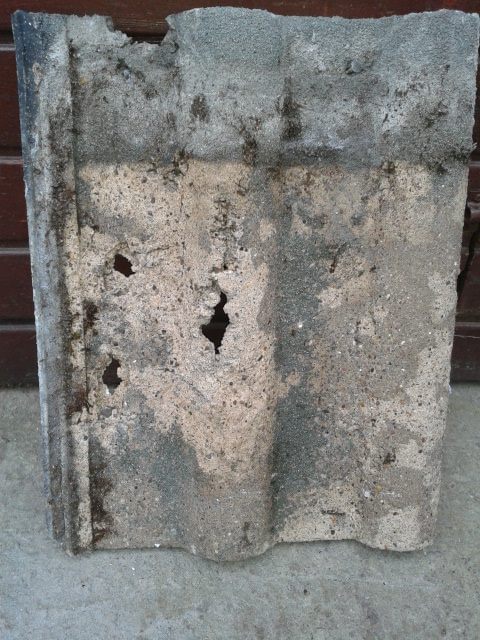
into it and by the water they hold against the surface, normally expected to simply run off, but is now held there keeping the roof constantly damp and subject to damaging freeze thaw cycles.
So moss removal, and preferably having a protective coating applied, makes a whole lot of sense, or it could mean a replacement roof or extensive repair work may well be the eventual result of your inaction.
And with the cost of a new roof being many thousand of ££££’s having a moss removal service in to clean and possibly coat it, is really a complete no brainer!